
The Golden Child of Wat Sam Ngam: The Kumarn Tong Sorcery of Luang Por Tae and Luang Por Yam
In the heart of Nakhon Pathom province, within the sacred grounds of Wat Sam Ngam, lies the origin of Thailand’s most feared and revered occult artifacts: the ‘Tukkatat Tong’ or Kumarn Tong. This is not merely a story of clay statues, but of a lineage of sorcery (Wicha) that has spanned nearly a century, mastered by the ‘King of Kumarn Tong,’ Luang Por Tae Khong Tong, and perfected by his prime disciple (Looksit Ek), Luang Por Yam.
The Genesis: Luang Por Tae and the Khmer Grimoires
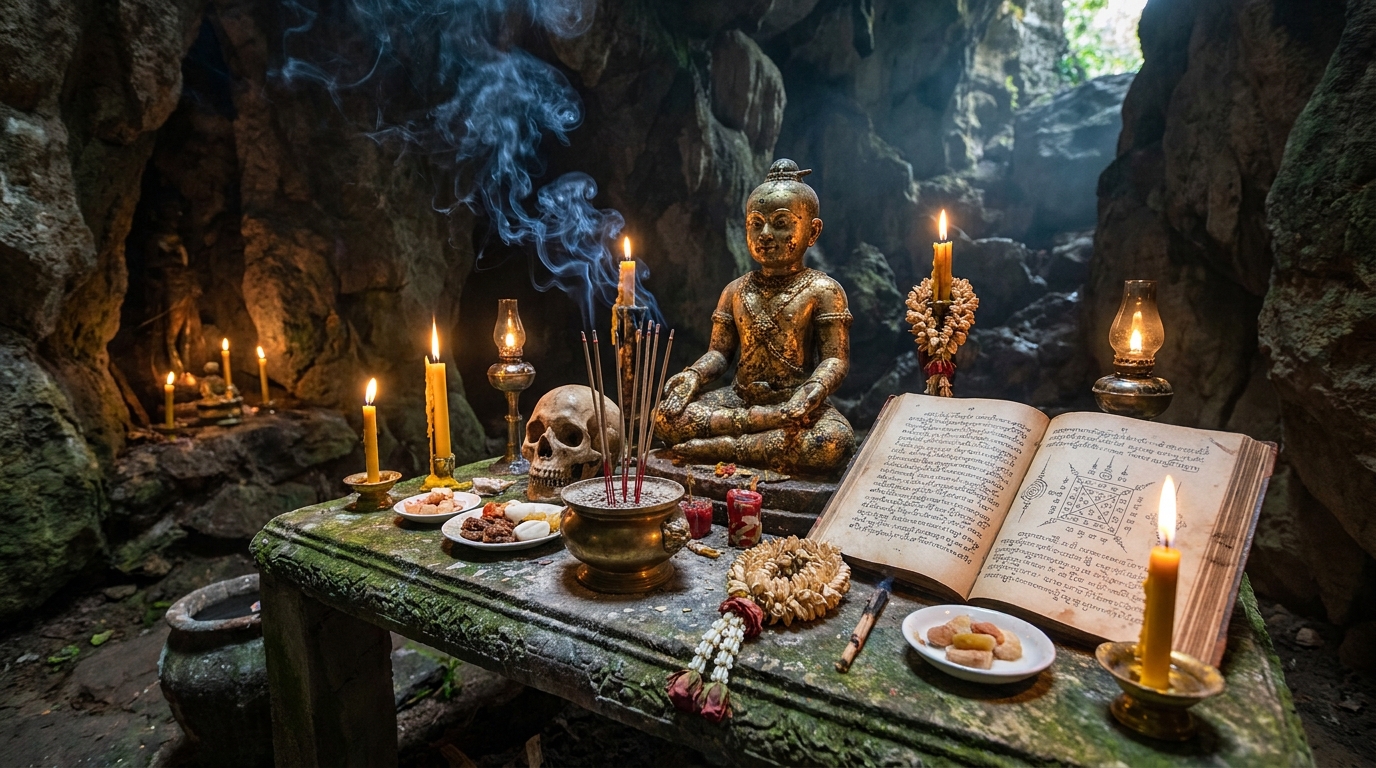
Luang Por Tae (1891–1981) was a master of the forest tradition. His journey into the dark arts began under his uncle, Luang Lung Daeng, and was further refined by a mysterious Khmer general-turned-sorcerer. During World War II, as the world burned, Luang Por Tae began creating his first ‘Tukkatat Tong’ to protect his disciples and local villagers from both physical danger and financial ruin.
The ‘Wicha’ used by Luang Por Tae was distinct. He avoided the standard ‘ghost’ invocation, choosing instead to ‘summon a soul’ into a body of sacred earth. This process transformed the spirit into a celestial being that would assist the practitioner without the ‘backlash’ often associated with darker necromancy.
The Sacred Alchemy: Seven Earths and Seven Cemeteries
The power of a Wat Sam Ngam Kumarn Tong lies in its ‘Muan Sarn’ (sacred materials). Following ancient Khmer grimoires, Luang Por Tae and Luang Por Yam utilized a potent mixture:
- Din 7 Pong: Earth from seven salt licks where forest spirits dwell.
- Din 7 Pa Cha: Earth from seven cemeteries, providing raw occult energy.
- Din 7 Tha Nam: Soil from seven busy piers, symbolizing the ‘flow’ of customers and wealth.
- Din 7 Khui Pu: Earth from crab holes, representing the constant activity of searching for sustenance.
The Prime Disciple: Luang Por Yam Thanyutto
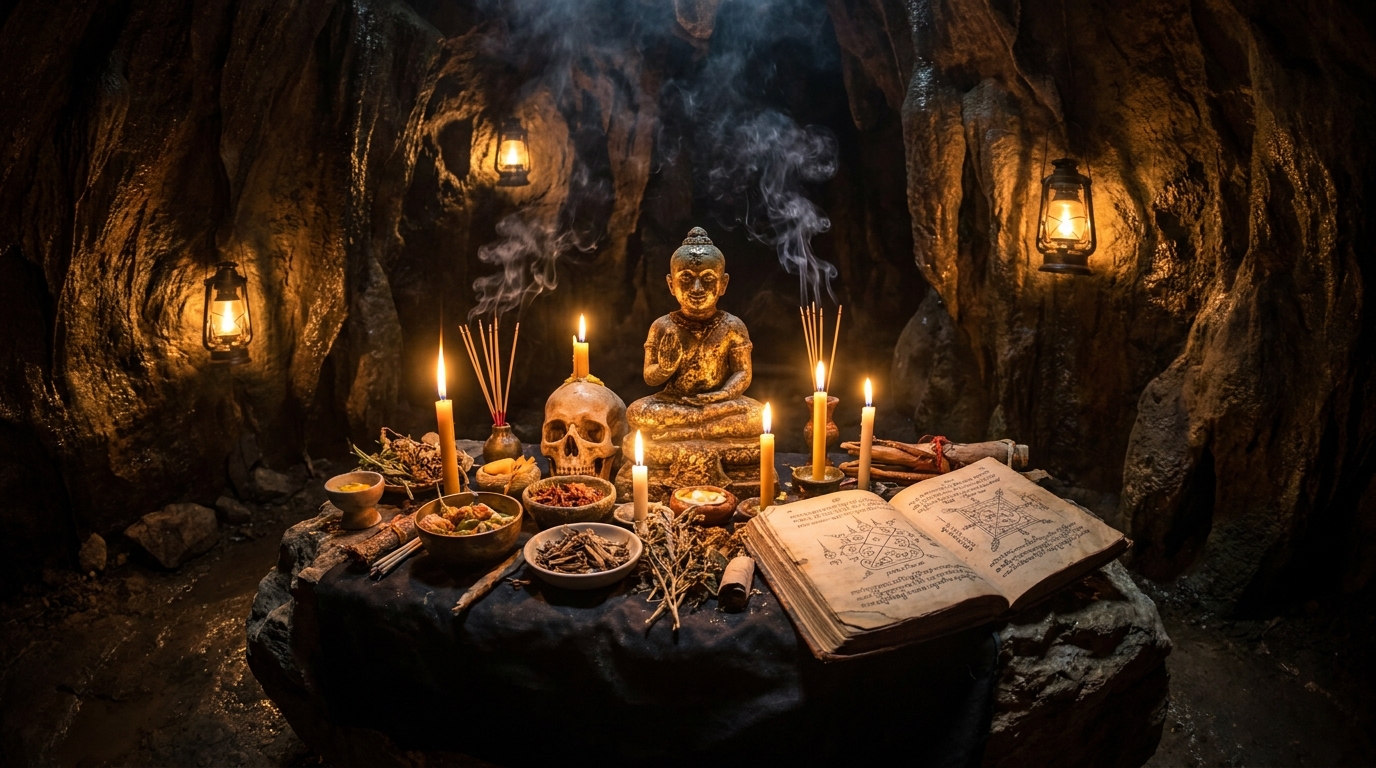
While Luang Por Tae founded the legend, it was Luang Por Yam (1915–2017) who ensured its survival for the modern age. As the ‘Looksit Ek’ (Prime Disciple), Luang Por Yam spent decades at the side of his master, absorbing every nuance of the ‘Calling of the Spirit.’
Luang Por Yam was famous for his manual ‘Charn Yant’ (hand-inscribed Yantra). Each Kumarn Tong under his tenure was hand-painted and individually empowered over seven days, specifically on ‘Strong Days’ (Saturdays and Tuesdays). His version, the ‘Chao Sap’ (Lord of Wealth) and ’99 Heng Heng’ editions, became global sensations, sought after by collectors from Singapore to New York.
The Ritual of Invitation
To keep a Kumarn Tong from Wat Sam Ngam is to invite a member into your family. The ritual requires:
- The Introduction: 16 sticks of incense to inform the house deities, and 3-5 sticks for the Kumarn himself.
- The Offering: Red Soda (Nam Daeng), sweets, and toys.
- The Prohibition: Never offer raw meat or alcohol; these spirits are oriented toward Buddhist merit, not dark cravings.
Conclusion: A Legacy of Merit
The Kumarn Tong of Wat Sam Ngam represent the peak of Thai occult artistry. They are guardians of the threshold, bridges between the seen and unseen, crafted by the two greatest masters of the Nakhon Pathom school. To own one is not just to possess an amulet, but to hold a piece of living Thai history.